What Every Rider in Nosara Needs to Know
If you’ve recently seen news about Traffic Police stopping electric bikes in Costa Rica, you’re probably wondering whether it’s still legal to ride an e-bike.
The short answer is yes.
The law governing electric bicycles has not changed. What has changed is that authorities have begun enforcing existing regulations more actively, particularly for vehicles that may be classified as bicimotos rather than pedal-assisted electric bicycles.
At Cali Bike, we’ve spoken directly with Costa Rica’s Road Safety Council (COSEVI) to understand exactly how the current regulations apply. This article explains the rules as they stand today and what they mean for both residents and visitors riding in Nosara.
The Law Has Not Changed
Recent enforcement has understandably created confusion, but it’s important to separate enforcement from legislation.
Costa Rica has not introduced a new law governing electric bicycles. Instead, Traffic Police have started checking certain electric two-wheel vehicles to determine whether they should legally be classified as bicimotos.
At the same time, MOPT and COSEVI have announced that they are preparing a new regulation that will go through public consultation. The purpose of this future regulation is to provide clearer definitions between pedal-assisted electric bicycles, bicimotos and motorcycles. Until that regulation is introduced, the current rules remain in effect.
What Is Considered an Electric Bicycle?
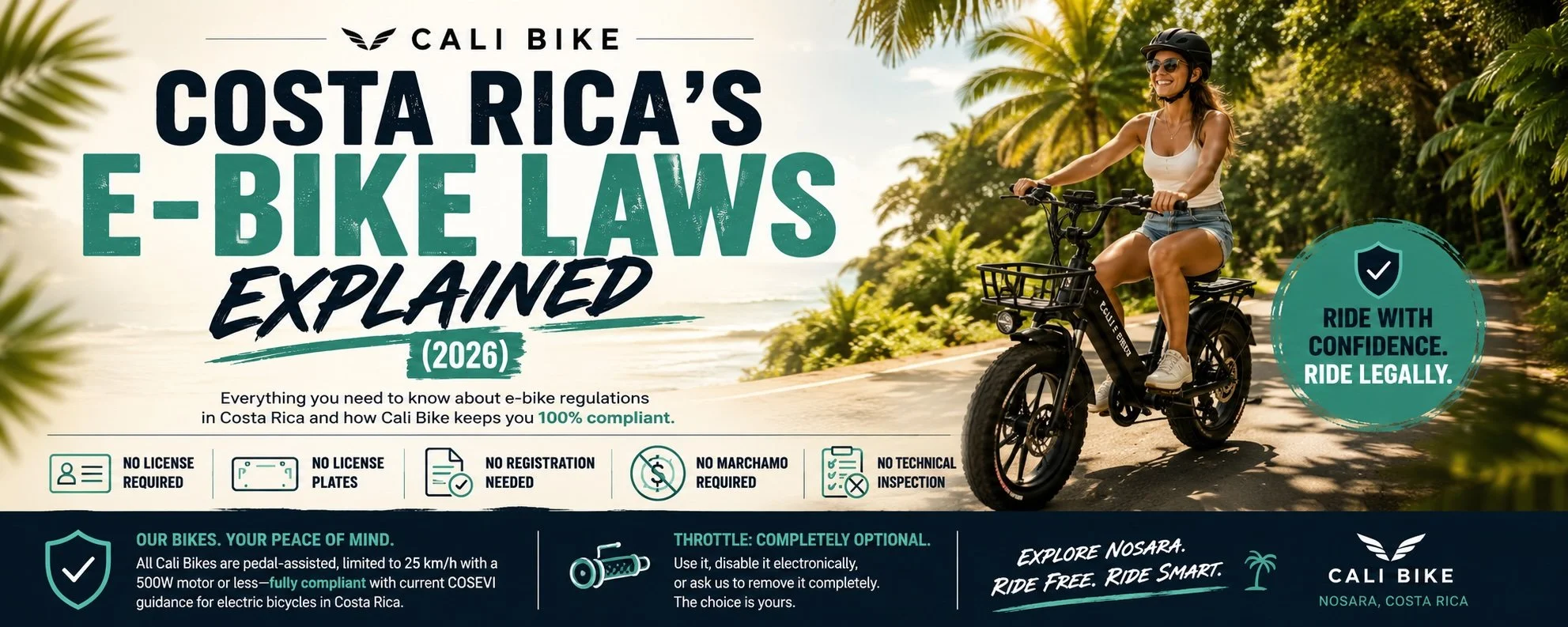
Based on the guidance we received directly from COSEVI, an electric bicycle is treated as a regular bicycle when it:
requires the rider to pedal for the motor to provide assistance;
uses an electric motor of 500 watts or less;
provides assistance only up to 25 km/h.
When those conditions are met, the bicycle does not require:
a driver’s licence;
registration;
licence plates;
Marchamo;
a technical vehicle inspection.
When Does a Vehicle Become a Bicimoto?
The distinction is straightforward.
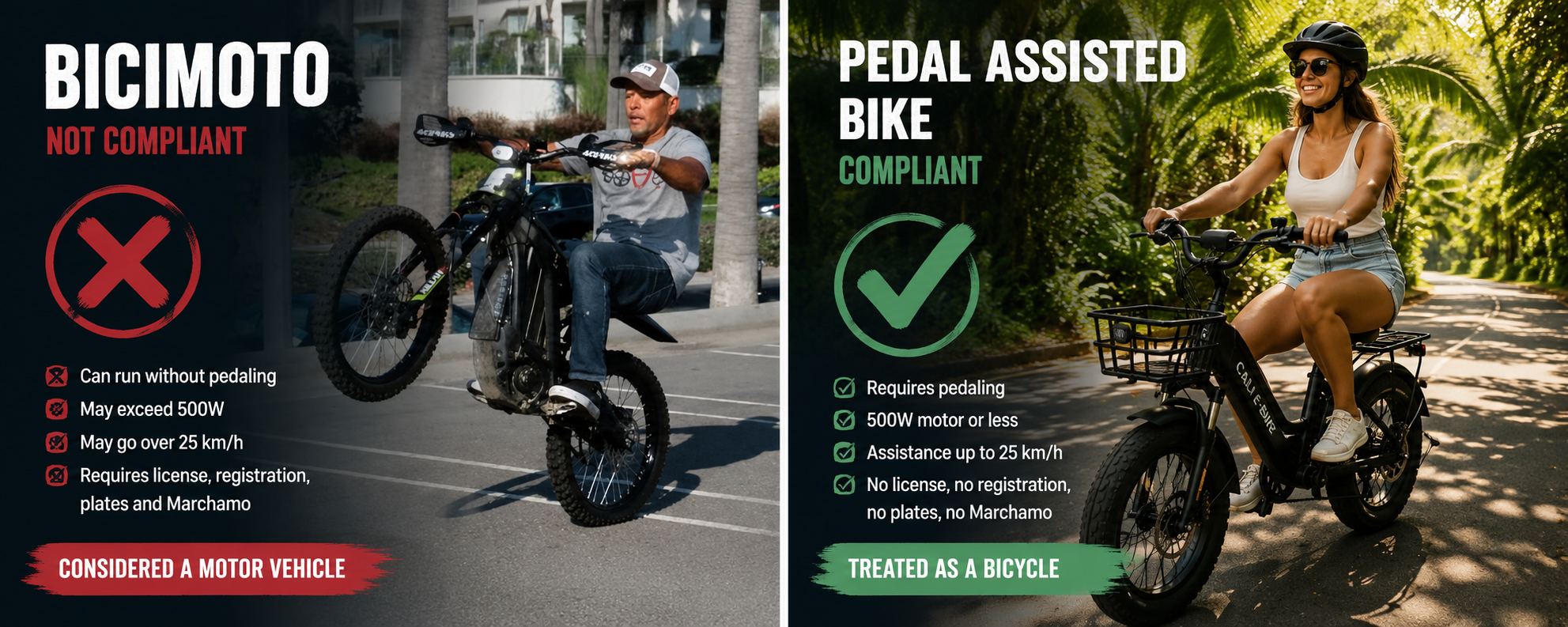
If a vehicle can be propelled entirely by its electric motor without the rider pedalling, it may be classified as a bicimoto rather than an electric bicycle.
Likewise, vehicles that exceed the permitted motor power may also fall into the motor vehicle category.
Those vehicles are subject to Costa Rica’s normal traffic regulations, including registration, Marchamo, technical inspection and the appropriate driver’s licence.
Are Cali Bikes Compliant?
Yes.
All Cali Bike electric bicycles are configured to comply with the current guidance provided by COSEVI for pedal-assisted electric bicycles.
Every Cali Bike:
requires pedalling for normal assisted riding;
is limited to 25 km/h assistance;
uses a motor within the current 500-watt guideline;
is designed to operate as a pedal-assisted electric bicycle.
For customers who would like additional peace of mind, every bike also allows the throttle to be electronically disabled. If preferred, we can completely remove the throttle before your rental begins.
This means you can ride knowing your bike is configured to meet the current requirements for a pedal-assisted electric bicycle in Costa Rica.
Ride With Confidence
Our goal has always been to provide a safe, enjoyable and fully compliant riding experience.
As regulations continue to evolve, we’ll continue working closely with COSEVI and monitoring any future updates issued by the Costa Rican authorities.
If the regulations change, we’ll update our bikes where necessary and keep this guide up to date so our customers always have accurate information.
Until then, you can explore Nosara with confidence, knowing that your Cali Bike has been configured to comply with the current regulatory guidance for pedal-assisted electric bicycles in Costa Rica.